

Community supervision is now the primary correctional experience in the United States. At year-end 2023, an estimated 3.77 million adults were on probation or parole, and more than two-thirds of all people under correctional supervision were supervised in the community rather than incarcerated.
To put that in perspective, one in every 70 U.S. adults were under community supervision during 2023.
At this scale, the challenge extends beyond the number of cases assigned to each officer. Agencies must also account for the time and work each case requires.
Caseload Is Only Part of the Workload
Officer time can only stretch so far. Each case brings direct client contact, risk assessments, case planning, compliance monitoring, reporting and other responsibilities that compete for attention.
An analysis of adult probation officers found that just 26% of recorded tasks involved face-to-face contact with people on probation, illustrating how much of an officer’s workload takes place outside direct interactions
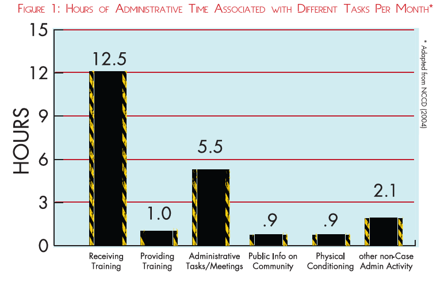
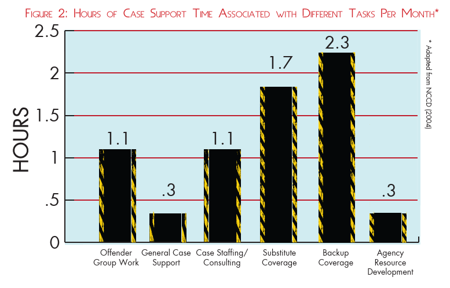
That is the distinction between caseload and workload. Caseload measures the number of cases an officer carries. Workload reflects the time and tasks those cases require. The American Probation & Parole Association’s (APPA) Community Supervision Workload Considerations for Public Safety accounts for both essential officer tasks and the risk levels of the people under supervision.
How Can Agencies Better Manage Officer Workloads?
Managing workload effectively means making the best use of available officer time. Not every case or interaction requires the same level of direct involvement, and routine supervision activities can often be handled more efficiently.
Risk-based supervision provides a framework for making those decisions. Agencies can align officer time and supervision resources with individual risk and needs rather than apply the same level of supervision to every case. APPA’s workload research also recognizes that the time required for supervision varies by risk level and the tasks involved.
That opens the door to handling routine activities such as check-ins, communication and information exchange more efficiently, while reserving officer time for interactions that call for professional judgment. Missed check-ins, incomplete tasks, or changes in client-reported information can alert officers before a minor issue becomes a violation.
Mobile Technology Can Support More Efficient Workload Management
For agencies looking to increase supervision capacity, app technology offers a practical way to manage routine work across an officer’s caseload. BI SmartLINK® helps reduce the administrative work associated with routine supervision. Clients can complete check-ins, communicate with officers and submit information electronically, helping streamline day-to-day supervision activities.
With tiered options based on risk and needs, SmartLINK helps agencies manage caseloads while making more efficient use of officer time. Automated administrative functions help officers quickly see who is on track and who may need attention, making it easier to prioritize higher-risk cases.
See how BI SmartLINK can help your agency streamline routine supervision work and make better use of officer time. Download the BI SmartLINK fact sheet.
*For agencies that may require a secure mobile location tracking option, SmartLINK pairs with SmartBand 1.0, a wrist-worn device that uses Bluetooth to create a wireless tether between the client and app.